
Indisponibil
Geoffrey Chaucer's - the canterbury tales
Editie critica
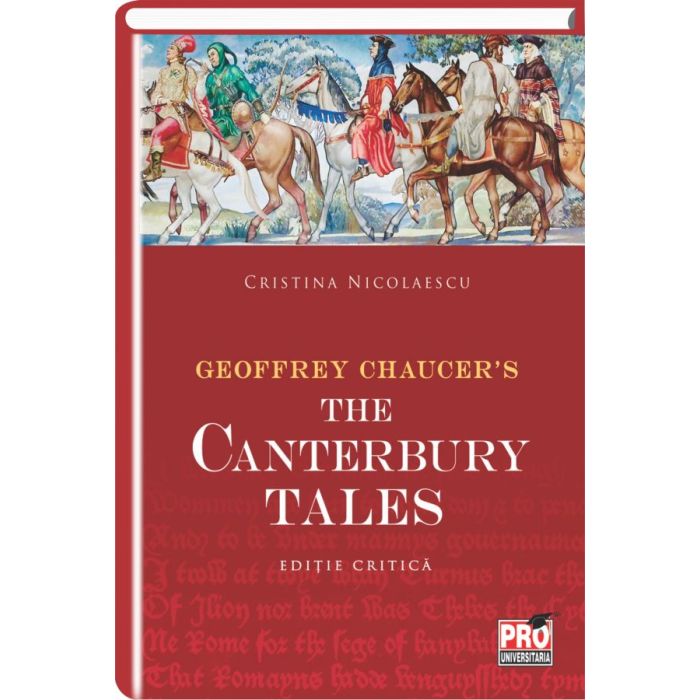
Geoffrey Chaucer's - the canterbury tales
Editie critica
50,00 RON
Cel mai mic preț din ultimele 30 de zile: 50,00 RON
Indisponibil
Livrare gratuită peste 200 RON
Curier 24-48h
Comandă prin telefon
Rapid
Livrare în două zile lucrătoare
Maxim 48h
Povestea din spatele paginii
The Canterbury Tales begins with a General Prologue in which the poet tells us how he
happened to meet these "nine and twenty" pilgrims on the way to Canterbury, how they agreed to
tell the tales at the suggestion of the landlord of The Tabard (the inn where they stopped in
Southwark in south London), and how they all appeared to the poet: their habits, their speech, their
clothes, their attitudes, and so on. His account of the pilgrims here, before any of them gets to tell a
tale, is a verbal portrait gallery with word pictures of the individuals who will later tell the famous
tales. It has often been remarked, and it is worth remarking again, that this portrait gallery provides
a wonderful cross section of fourteenth-century English society. Not a complete and
comprehensive survey, for Chaucer is a poet not a sociologist, but one remarkable for its diversity:
there are men and women, clerics and laymen; young, middle aged and old; people who differ
widely in their spiritual lives, their economic status, their tastes in clothes, books, and food; those
who need to travel constantly and those for whom this will be the one major journey of their life.
There are rogues and innocents, introverts and show-offs, saints (few) and sinners (many). The
people in this varied group tell an equally varied selection of tales, some of them dealing with
"gentleness, morality and holiness" as Chaucer says himself. Many are also highly comic,
including the tale of the Miller and the Prologue of the Wife of Bath. And one of the most
surprising tellers of a moral tale is that ugly and immoral man the Pardoner. “God’s plenty” the
poet Dryden later called it.
Format · tipar
Cartonată
Academic (17 × 24 cm)
Limbă
Română
Identificatori
ISBN
978-606-647-591-4
Editură
2013
20-05-2013
Istoricul tău